

How did one viral tweet nearly destroy a chef’s career—and later help rebuild it? Explore eWOM, online reputation, and buzz in Chef (2014).

From Viral Backlash to Business Success: The eWOM Lesson in Chef
-
- 4 minute read
- 0 Comments
What can destroy a career or a brand faster than a poor product?
In Jon Favreau’s Chef (2014), the answer is not poor food. It’s a viral conversation.
At first sight, Chef appears to be a wonderful movie about culinary passion, family relationships, and second chances. But behind the surface, the film provides a shockingly excellent case study of Electronic Word of Mouth (eWOM), the digital development of classic word-of-mouth marketing.
More importantly, Carl Casper’s experience demonstrates that eWOM has the potential to both destroy and regenerate a brand quickly.
What Is eWOM?
Electronic Word of Mouth (eWOM) is defined as any positive or negative statement made by potential, current, or previous customers about a product, service, brand, or individual that is made available to a large number of people via the internet.
Unlike traditional word of mouth, which is constrained by geography and one-on-one interactions, eWOM scales quickly. It spreads rapidly through various digital marketing channels:
- Social media posts and tweets
- Online reviews
- Forum discussions and comment sections
- Photos, Instagram Stories, and TikTok videos
- Blog posts and online articles
Because digital content can be shared quickly, a single consumer opinion can reach thousands—if not millions—of individuals in just hours. This is exactly what happens to Carl Casper.
When Negative eWOM Goes Viral: A Brand Reputation Crisis
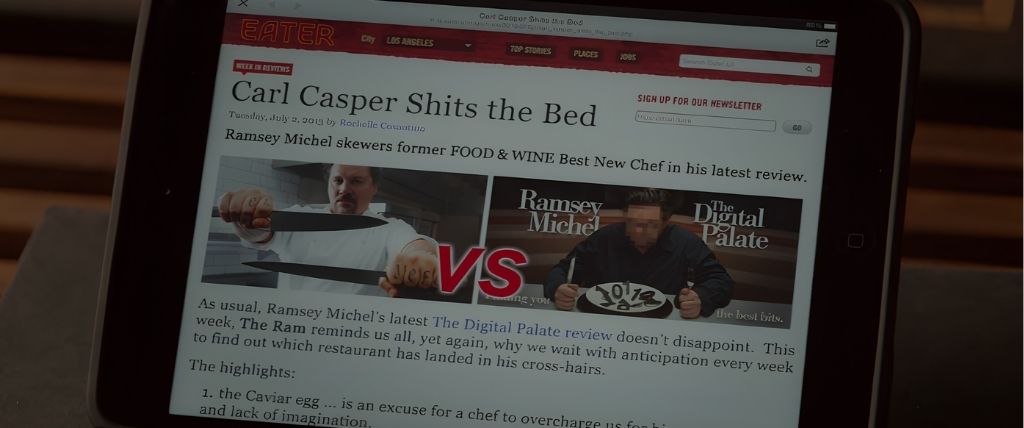
Early in the film, an influential food reviewer gives Chef Carl Casper a harsh public critique. Carl, frustrated, angry, and unfamiliar with the basics of social media, responds with an abusive tweet.
There is only one huge problem: he is unaware that his reaction is public.
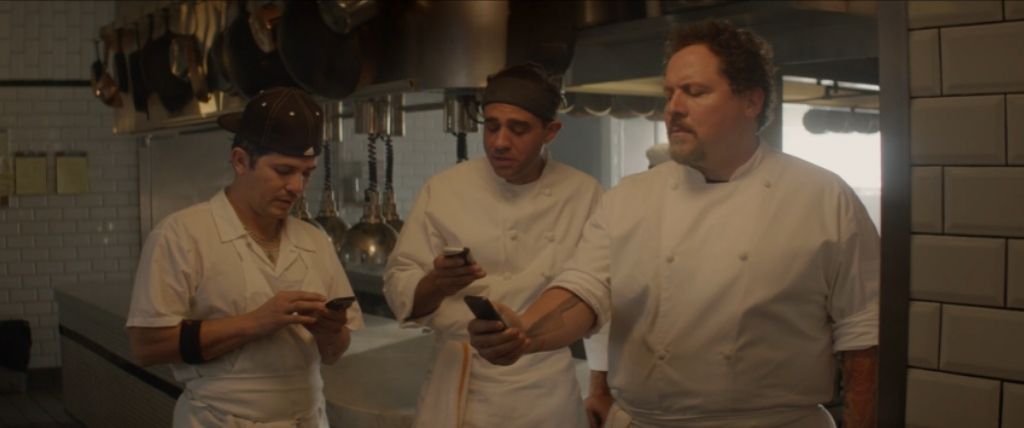
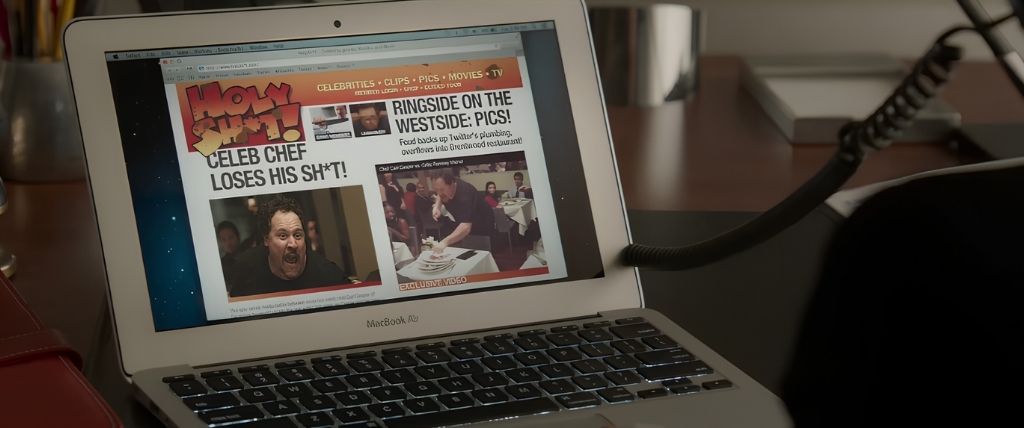
What Carl perceives as a private, direct reaction rapidly becomes a widespread online spectacle. The internet ecosystem immediately amplifies the conflict as users begin sharing:
- Screenshots of his angry tweets
- Video recordings of his public confrontation in the restaurant
- Memes, reactions, and personal opinions about the incident
Suddenly, online conversations is no longer about his culinary skills or the restaurant’s offerings. It’s all about Carl’s public collapse. This demonstrates a key truth of digital marketing: online conversations frequently spread faster than marketers can manage them.
The end result? A destroyed reputation, public embarrassment, and the quick loss of his job.
The Ultimate Comeback: Harnessing Positive eWOM
Chef is an exceptional marketing case study because the story does not finish in a PR problem. After leaving the regular restaurant industry, Carl starts a food truck (El Jefe) and embarks on a cross-country road trip.
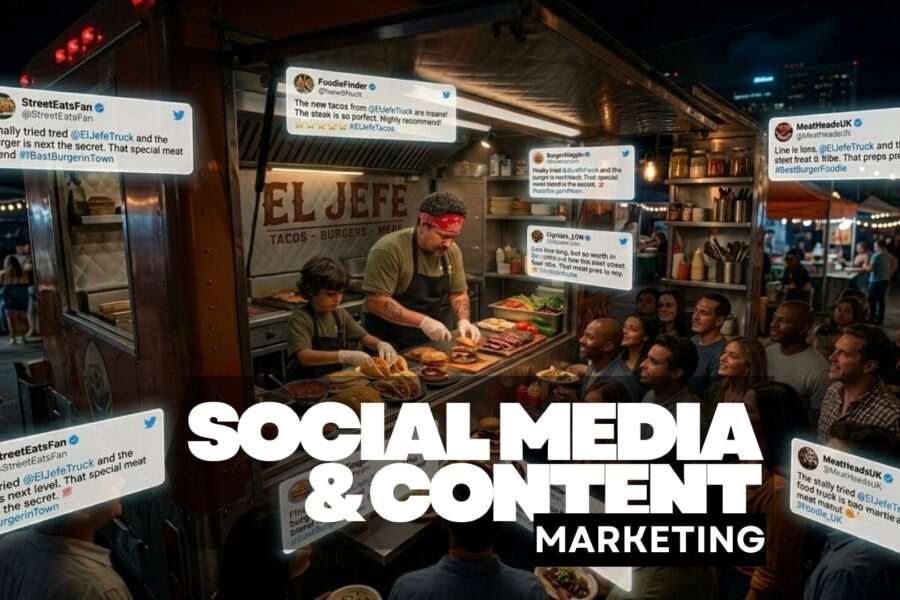
This is where the film highlights the benefits of the digital landscape. With his tech-savvy son Percy handling the organic social media strategy, customers begin posting:
- Aesthetic photos of the mouth-watering Cubano sandwiches
- Positive real-time dining experiences
- The food truck’s live location updates and Geotags
- Direct recommendations to friends and online followers
Instead of criticism, genuine enthusiasm begins to spread over the internet. The same digital ecosystem that amplified Carl’s failure now amplifies his success, resulting in huge brand exposure.
When eWOM Turns into Buzz
As more people share their experiences, the food truck attracts greater crowds. This gives the characteristic buzz effect. Buzz occurs when the public’s attention to a topic increases dramatically as a result of continual conversation. It’s interesting that Carl never undertakes a major commercial campaign. People who share their experiences get the greatest attention.In other words:
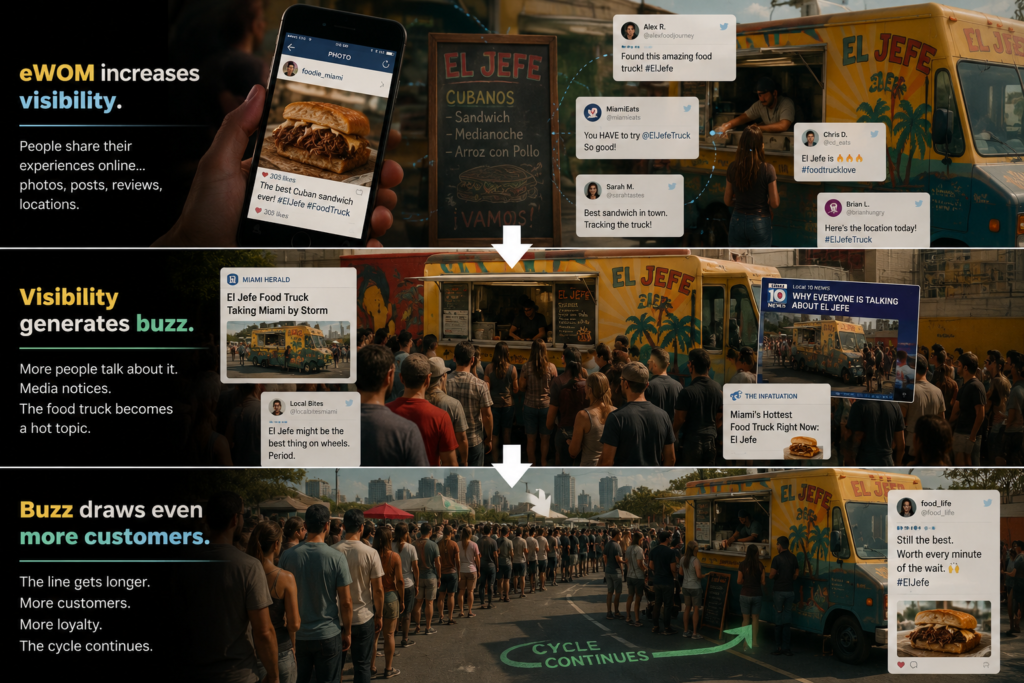
The film demonstrates how these effects can reinforce one another and create momentum for a brand.
Why the Food Truck Succeeds
Carl’s food truck’s success is not due to expensive advertising. It is powered by something more powerful: genuine consumer experiences. People don’t post because they were paid to. They’re posting because they really appreciated the cuisine and wanted to share it. This reflects a broader marketing principle:
Consumers often trust other consumers more than they trust brands.
A suggestion from a friend, customer, or creator often has more credibility than a standard advertisement.
The Marketing Lesson from Chef
The most important lesson from Chef is that internet conversations can influence a brand’s destiny. Whether positive or negative, these interactions have an impact on reputation, visibility, consumer perceptions, and purchase decisions.
Carl’s story illustrates both sides of the equation. Negative eWOM nearly ends his career. Positive eWOM helps to rebuild it. The technology never changes. Only the discourse does.

When the Conversation Becomes the Brand
Chef is widely recognised as a film about cuisine and personal transformation. However, from a marketing standpoint, it is also a compelling example of how Electronic Word of Mouth operates in the digital age. The film reminds us that brands do not always have control over their messaging. Customers, critics, and online communities occasionally do. In today’s interconnected society, a single conversation can either harm or benefit a person’s reputation.
For the Brave Souls and Scholars
Akbari, M., Foroudi, P., Fashami, R. Z., Mahavarpour, N., & Khodayari, M. (2022). Let us talk about something: The evolution of e-WOM from the past to the future. Journal of Business Research, 149, 663-689. DOI: 10.1016/j.jbusres.2022.05.061
Alboqami, H., Al-Karaghouli, W., Baeshen, Y., Erkan, I., Evans, C., & Ghoneim, A. (2015). Electronic word of mouth in social media: the common characteristics of retweeted and favourited marketer-generated content posted on Twitter. International Journal of Internet Marketing and Advertising, 9(4), 338-358. https://doi.org/10.1504/IJIMA.2015.072886
Boldureanu, D., Gutu, I., & Boldureanu, G. (2025). Understanding the dynamics of e-WOM in food delivery services: A SmartPLS analysis of consumer acceptance. Journal of Theoretical and Applied Electronic Commerce Research, 20(1), 18. https://doi.org/10.3390/jtaer20010018
Erkan, I., Acikgoz, F., Elwalda, A., Rahman, M., & Akin, N. (2021). Mobile word of mouth in mobile messaging applications: an exploration of its antecedents and consequences. International Journal of Business Information Systems, 37(1), 45-62. https://doi.org/10.1504/IJBIS.2021.115066

Leave a Comment