

The Help shows how powerful Word of Mouth can be when a story creates real emotional impact. The film reminds us that people do not share advertisements—they share experiences, emotions, and stories worth talking about.

Why Do People Share Something That Was Never Advertised?
-
- 3 minute read
- 0 Comments
Some products are everywhere—appearing on billboards, social media, and sponsored content. Then there’s the opposite: products you never see promoted, yet everyone is talking about them.
The famous novel featured in the film The Help falls perfectly into this second category. There is no big launch, no aggressive media expenditure, and no visible marketing strategy. However, people are whispering about the book to one another. Why?
Because sometimes the most effective form of marketing is not the brand talking about itself, but rather people talking about the brand. In marketing, this is known as Word-of-Mouth (WoM) marketing.
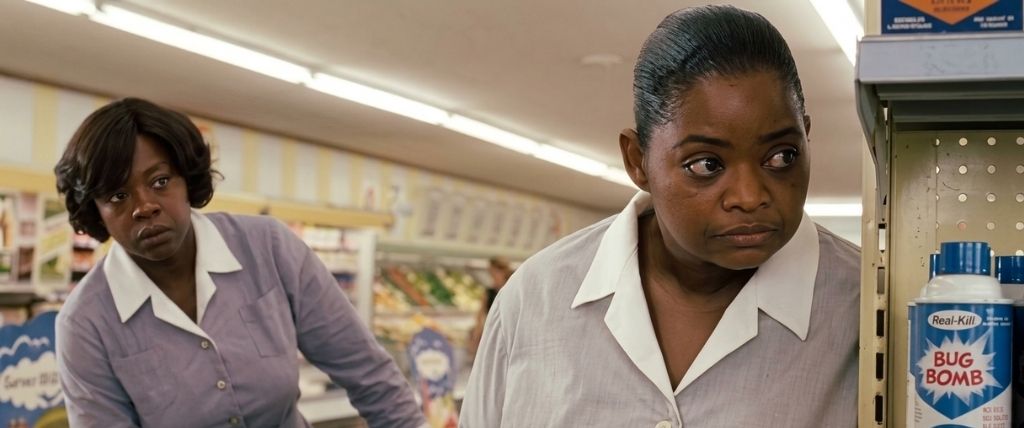
Trust Over Ads
The way the book spreads in the film is quite impressive. People are even hesitant to openly recommend it; they read it in private first, then whisper it to those they trust the most. This reminds us of the most fundamental marketing truth: the basis of word-of-mouth is trust, not reach.
Consumers today trust other consumers’ experiences rather than brand claims. An advertisement may claim that a product is the “best,” but a friend’s message, “You absolutely must read this,” is more persuasive than all advertising budgets combined. This is the most serious issue facing brands today: individuals are losing trust in brands while increasing trust in one another.
People Share Emotions, Not Products

The book in The Help is more than just a collection of facts. People share that book because it provokes an emotional response.
This is the most important aspect of Word of Mouth. People exchange feelings, not products. The desire to promote something to someone else is usually emotional, not rational. Emotions include surprise, anger, inspiration, empathy, and excitement. When something evokes a strong reaction in people, they instinctively begin to share it. Because sharing is also a form of identification. conveying, “You should watch this,” is a way of conveying, “This thing affected me.”
Word of Mouth Cannot Be Bought, It Can Only Be Earned

The most common mistake brands make is thinking they can “manage” Word of Mouth Marketing like an advertising campaign. True WOM, on the other hand, can only be “earned.”
People share things when:
- They find them sincere,
- They see a part of themselves in them,
- Or they see telling others as a “social status” or “value.”
Therefore, talk-worthiness rather than media budget serves as the fuel for WOM. That’s why million-dollar campaigns are forgotten in a week, while a sincere story can shape culture for years.
When Marketing Becomes a Movement

The movie shows that WOM is a social behavior as much as a method. People share the book to express their opinions as well as out of curiosity. Giving someone the book is a silent protest against the current situation.
This is the pinnacle of marketing: a product becomes an integral part of people’s identities and ideals rather than merely something to be consumed.
Is Your Brand Worth the Whisper?
Today, brands are constantly focusing on the question: “How do we get this message to people?” But from a Beyond Plot perspective, the real question we should be asking is: “Why would people tell each other about this?”
Advertising can buy attention, but what makes people recommend something while looking each other in the eye is always something deeper: emotion, meaning, and courage. The Help reminds us: Sometimes the most effective marketing is the kind that doesn’t look like marketing at all.
Behind every plot, there’s a little bit of marketing. Do you think your brand is still worth talking about even when people aren’t paying for it?
For the Brave Souls and Scholars
Erkan, I., & Evans, C. (2018). Social media or shopping websites? The influence of eWOM on consumers’ online purchase intentions. Journal of marketing communications, 24(6), 617-632. https://doi.org/10.1080/13527266.2016.1184706
Reimer, T., & Benkenstein, M. (2016). When good WOM hurts and bad WOM gains: The effect of untrustworthy online reviews. Journal of Business research, 69(12), 5993-6001.
Srivastava, D., & Sharma, R. W. (2017). Developing a model for studying the antecedents and effects of Word of Mouth (WoM) and e-WoM marketing based on literature review. Jindal Journal of Business Research, 6(1), 25-43. https://doi.org/10.1177/227868211770030

Leave a Comment