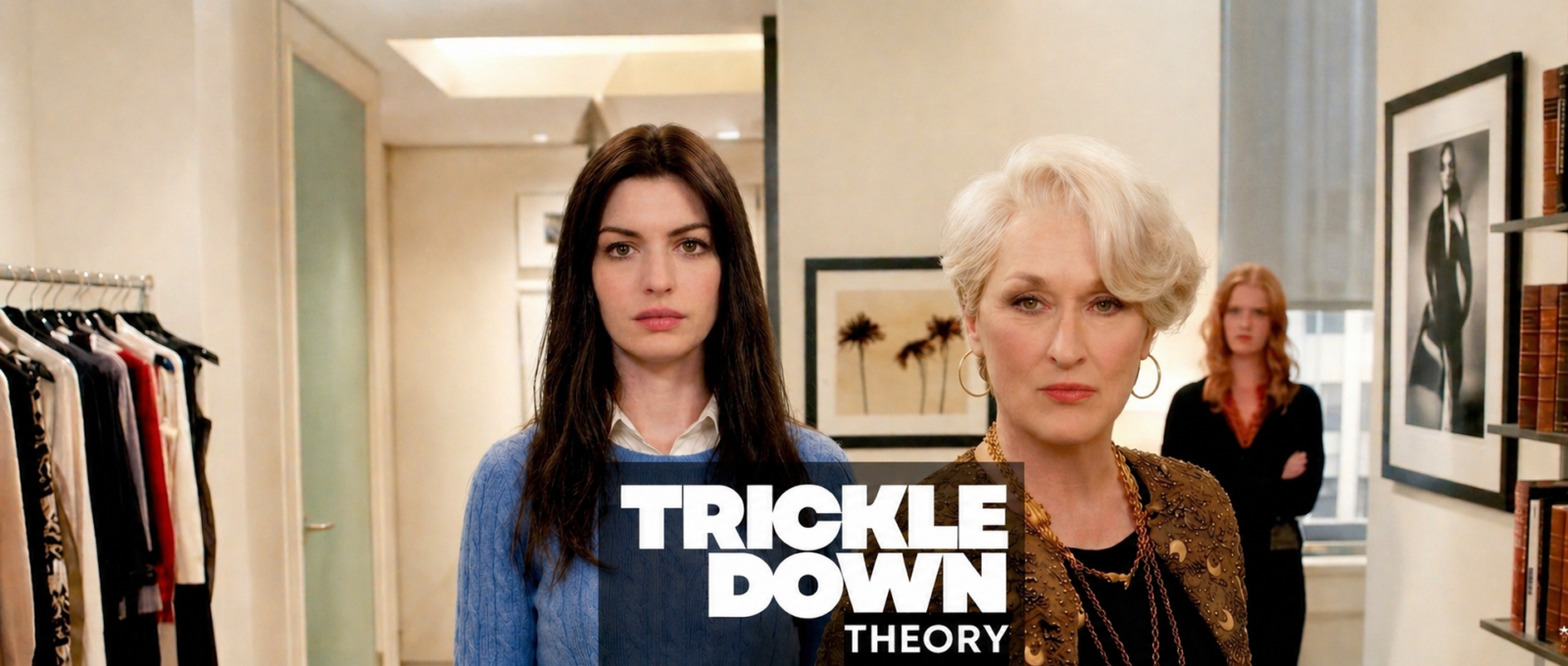
That color you thought you ‘randomly’ picked from your closet is actually the final link in a global marketing operation approved at a conference table months ago. Through the lens of Miranda Priestly’s Cerulean monologue, we decode the invisible hierarchy of fashion and the illusion of consumer free will via the Trickle-Down Theory.
share
I see. You think this has nothing to do with you.
Miranda Priestly
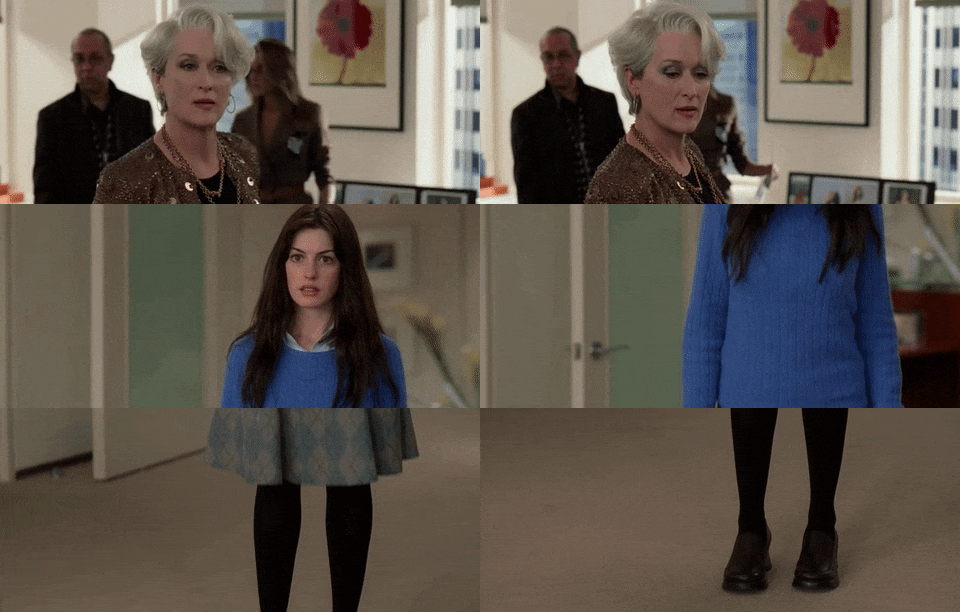
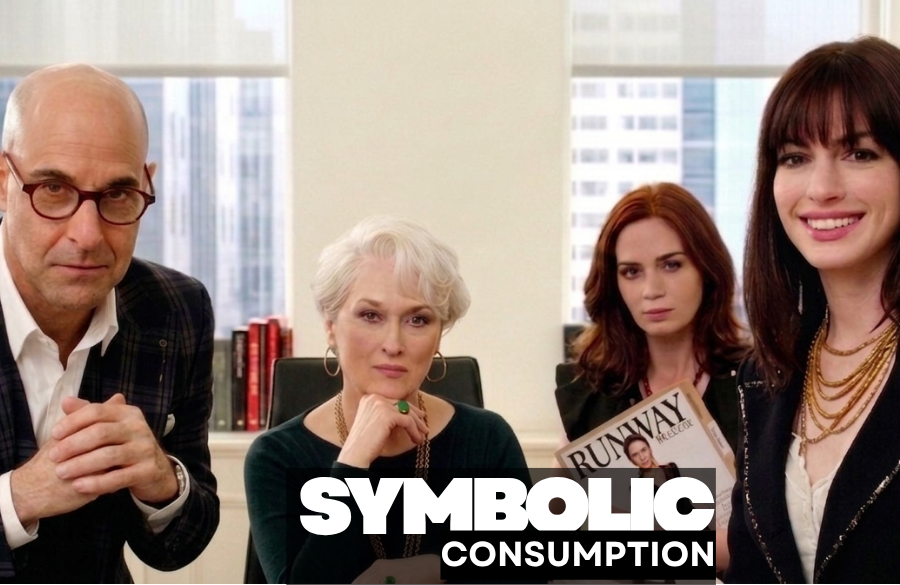
Do you wake up in the morning and think you’ve “randomly” picked a sweater from your closet? The iconic “Cerulean” scene in The Devil Wears Prada serves as a sharp reminder that this is never the case. Miranda Priestly’s historic lecture to Andy Sachs is more than just a fashion critique; it is a masterclass in how the modern marketing machine operates.
The Invisible Hand: Trickle-Down Theory
Fashion doesn’t just appear overnight; it moves. In marketing and fashion theory, this hierarchical journey is known as the “Trickle-Down Theory”. The trickle-down theory explains a specific distribution of trends: they originate at the top of the pyramid (luxury segment and high-status influencers) and gradually permeate the base (the mass market). This scene provides an anatomy of how a single colour ends up being “everywhere”:
Supply-Driven Innovation: The process begins with supply, not demand. High-fashion houses dictate a colour or silhouette to create a sense of “exclusivity”. The goal here isn’t mass volume; it’s creating aspirational value.
Curation and Demand Generation: Prestigious media outlets and influencers validate this new trend. In marketing terms, this is the “Social Proof” stage. The masses are told what they should desire before they even know it exists.
Price Segmentation and Accessibility: Once the trend reaches the mid-market (fast-fashion giants), the “democratisation” of design begins. The DNA of the original luxury product is preserved, but its cost and quality are scaled down to make it a mass-consumption commodity.
Saturation and Devaluation: When the trend hits the clearance bins, it loses its “exclusivity”. The marketing cycle is complete because the elite at the top have already abandoned the trend to create a new, “unique” one.
Personal Choice or the Final Link in the System?
Even when we say, “I have my own style,” we are often just representing the final step of a massive global marketing operation. That colour you thought you chose at random was actually approved months ago by visionary designers and strategic marketers at a conference table.
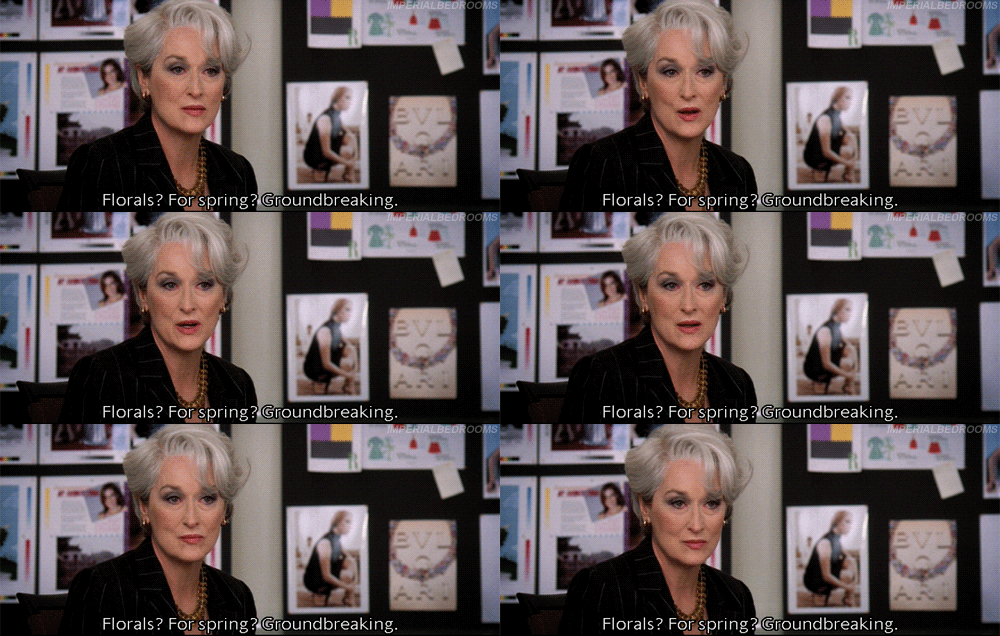
In marketing, this is a classic example of the “Framing Effect”. The choices presented to the consumer are so masterfully narrowed down that the individual mistakes this limited selection for “free will”. As Miranda famously put it:
That sweater isn’t just blue; it is the result of a multi-million-dollar marketing budget and a strategic distribution plan.
A Real Story: Why Cerulean?
Image by WWD
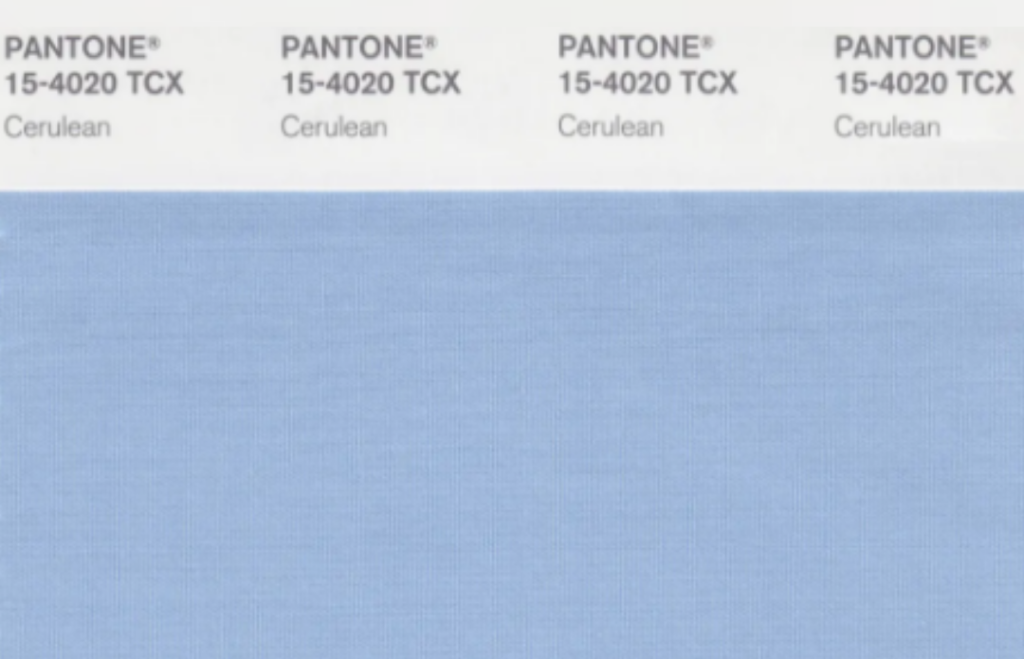
What makes this scene so compelling isn’t just Miranda’s authoritative tone—it’s the reality of the colour itself. In a brilliant move of strategic branding, Pantone named Cerulean its inaugural “Colour of the Year for 2000″ to mark the turn of the millennium.
This choice was far from random; it was a response to the global zeitgeist. As we entered a new era, this sky-blue shade was marketed to reflect a collective desire for tranquillity, stability, and inner calm in an uncertain, fast-changing world.
While the movie dramatises the process, the commercial logic is entirely real: you didn’t just choose a colour; you bought into a global mood that was curated, branded, and delivered to your closet through a pre-determined cycle.
For the Brave Souls and Scholars
Güngördü Belbağ, A., Deligonul, S. Z., Üner, M. M., & Cavusgil, S. T. (2026). The “trickle-across” phenomenon: consumption-mimicking in emerging markets in a stress environment. International Journal of Emerging Markets, 21(3), 876-896. https://doi.org/10.1108/IJOEM-08-2024-1471
Mohr, I., Fuxman, L., & Mahmoud, A. B. (2022). A triple-trickle theory for sustainable fashion adoption: the rise of a luxury trend. Journal of Fashion Marketing and Management: An International Journal, 26(4), 640-660. https://doi.org/10.1108/JFMM-03-2021-0060
Kuipers, G., Brans, L., & Carbone, L. (2023). The myth of trickle-down: How fashions do (not) spread in European fashion magazines, and what this tells us about power and status in the global fashion system. In Fashion’s Transnational Inequalities (pp. 114-142). Routledge. https://doi.org/10.4324/9781003219675




Leave a Comment