

Discover how The Dressmaker perfectly illustrates Differentiation Strategy. Learn why creating unique customer value beats competing on price.
The Dressmaker Shows Why Being Different Beats Being Cheap
-
- 3 minute read
- 0 Comments
In today’s competitive markets, many firms believe that cutting prices is the most effective method to acquire customers. While pricing cuts can boost sales in the near term, competing just on price rarely yields a permanent competitive advantage. Marketing experts emphasise that generating consumer value, rather than simply giving the lowest price, leads to long-term success.
The 2015 film The Dressmaker illustrates this idea surprisingly well through one of its main characters, Tilly Dunnage.
Tilly Doesn’t Compete on Price
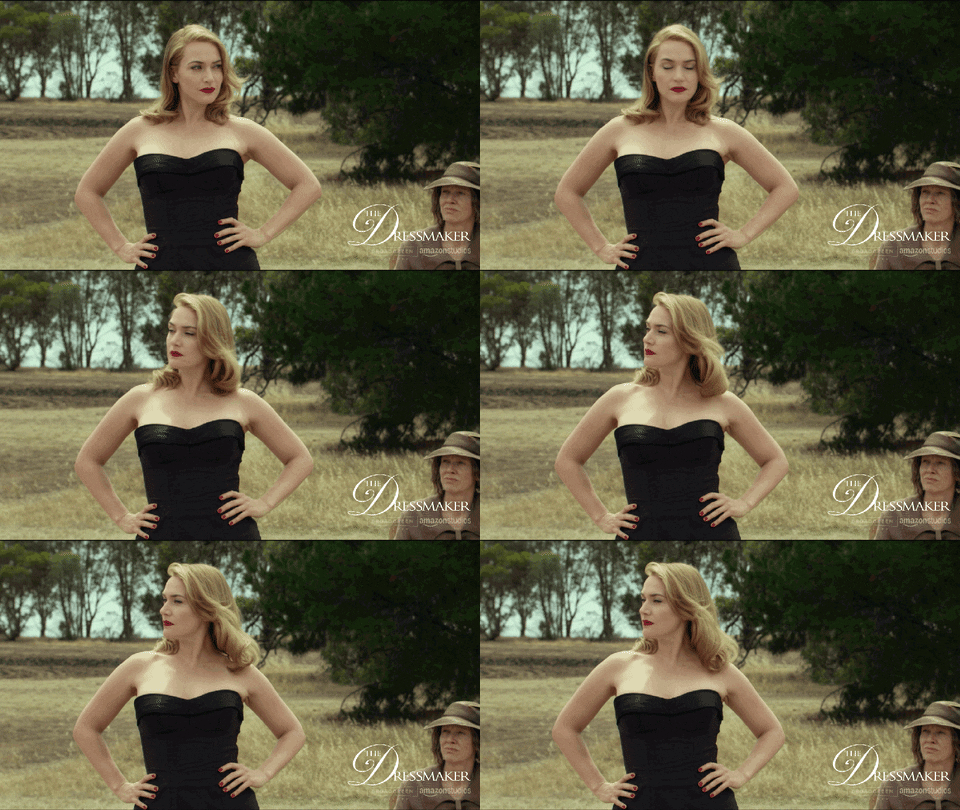
When Tilly returns to the small Australian town of Dungatar, she does not try to attract customers with lower prices. Instead, she introduces something the town has never seen.
- Bold, elegant designs
- Paris haute couture expertise
- Premium craftsmanship
- Highly personalized tailoring
Rather than competing on price, she creates an entirely different level of value.
What Is Differentiation Strategy?
According to marketing theory, differentiation strategy is about providing customers with something unique that competitors cannot readily replicate.
Businesses can compete in several ways. Some focus on cheaper prices, while others compete by offering unique products, superior quality, inventive design, specialised expertise, or excellent customer service.
The purpose of distinction is to provide value that customers find important enough to choose your offer over lower-cost alternatives.Rather than competing primarily on price, businesses compete on what makes them distinct.
How Tilly Creates Differentiation
Throughout the film, Tilly’s dresses become desired not because they are pricey, but because they are unlike anything else in town. Her competitive advantage is derived from combining numerous differentiators:
1. Superior Design
Her dresses immediately stand out from the ordinary styles worn throughout Dungatar. They are elegant, bold, and visually distinctive.

2. Premium Craftsmanship
Having trained in Paris, Tilly brings a level of technical skill and attention to detail that local competitors simply cannot match. Her craftsmanship becomes part of the product’s perceived value.

3. Personalization
Every dress is tailored specifically for the individual wearing it. Rather than selling standardized products, she creates garments that reflect each customer’s personality, body, and aspirations. This makes each dress feel exclusive.

Customers Buy More Than a Dress
One of the most intriguing marketing lessons of The Dressmaker is that buyers don’t only buy clothes. They are buying transformation. Tilly’s designs help characters acquire confidence, attract attention, and change their perceptions of themselves. The functional product is a dress. The true value is identity, confidence, and self-expression. This explains why differentiation is so effective:
Customers often purchase outcomes and emotions, not just products.
Why Competing on Price Is Dangerous
Price competition is simple to replicate. If one company cuts its prices, others can frequently do the same. Eventually, everyone gets smaller profits while selling essentially the same product.
Differentiation alters the conversation. Customers are increasingly comparing value rather than price. The more unique your offering is, the less pricing matters.

The Real Lesson Behind The Dressmaker
Tilly Dunnage isn’t successful because she’s the cheapest dressmaker in town. She succeeds because she provides something that no one else can. She offers value for customers that they cannot get anywhere else by using bold designs, great craftsmanship, and highly personalised tailoring.
This is the essence of Differentiation Strategy. Rather than competing exclusively on price, businesses generate genuine value that distinguishes themselves from competitors.
The Dressmaker reminds us that, while price can impact purchasing decisions, it is rarely the primary reason people choose a brand. When a company offers something unique and difficult to replicate, people start evaluating value rather than just pricing.
Whether you’re building a fashion brand, launching a startup, or growing a personal brand, the lesson remains the same:
The strongest brands aren’t always the cheapest—they’re the ones that create value customers can’t easily find anywhere else.

For the Brave Souls and Scholars
Cattani, G., Dunbar, R. L., & Shapira, Z. (2017). How commitment to craftsmanship leads to unique value: Steinway & Sons’ differentiation strategy. Strategy Science, 2(1), 13-38. https://doi.org/10.1287/stsc.2017.0024
D. Banker, R., Mashruwala, R., & Tripathy, A. (2014). Does a differentiation strategy lead to more sustainable financial performance than a cost leadership strategy?. Management decision, 52(5), 872-896. https://doi.org/10.1108/MD-05-2013-0282
Miller, C. D., & Wang, R. D. (2024). Product digitization and differentiation strategy change: Evidence from the book publishing industry. Strategic Management Journal, 45(7), 1241-1272. https://doi.org/10.1002/smj.3586



Leave a Comment