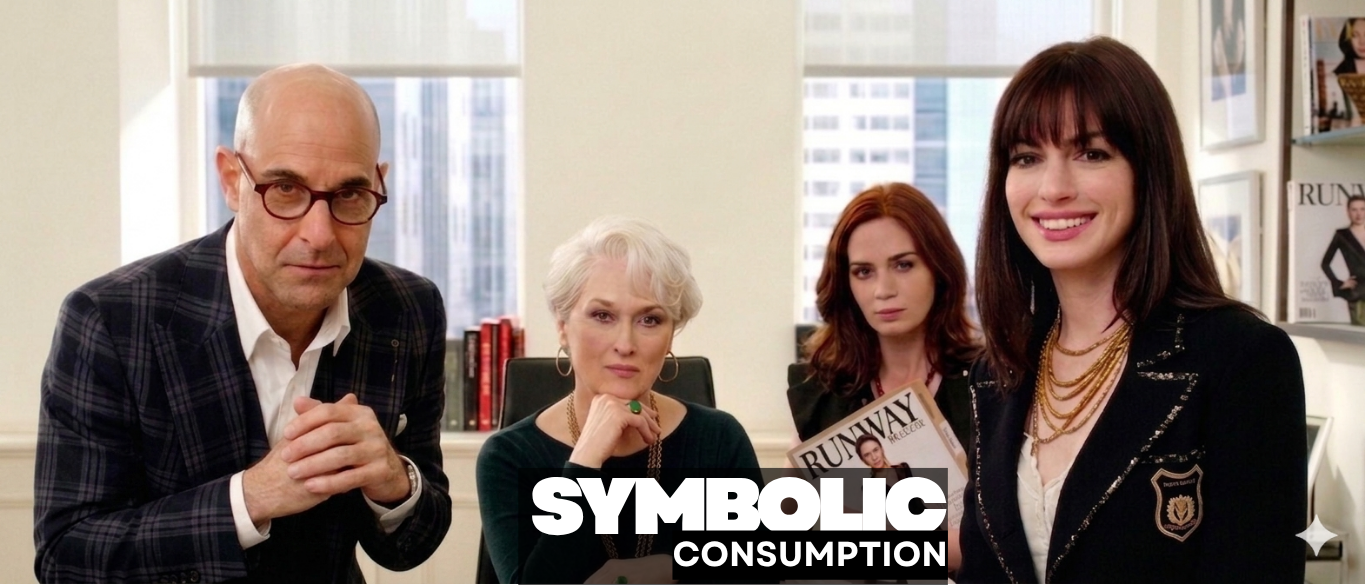
Is consumption merely about meeting needs, or is it a silent language? In this article, where we analyze symbolic consumption through The Devil Wears Prada, we explore the power of brands in identity construction and Andy Sachs’s struggle to integrate into the system.
share
That’s how things work around here. If you want to be part of a group, you must first speak their language and then don their armour. To understand symbolic consumption, the first place we must turn our gaze is the ‘bible’ of the fashion world: The Devil Wears Prada.
Consumption as an ‘Entry Ticket‘
Symbolic consumption is the act of using a product not for its utility, but for the status, identity, and sense of belonging it provides. This concept takes shape in the flesh through Andy Sachs’s struggle for survival in the hallways of Runway magazine. In her book, Lauren Weisberger opens the story with this warning from Henry David Thoreau:
Beware of all enterprises that require new clothes
hENRY DAVID THOREAU
The Tipping Point: From Failure to ‘Chanel‘ Boots
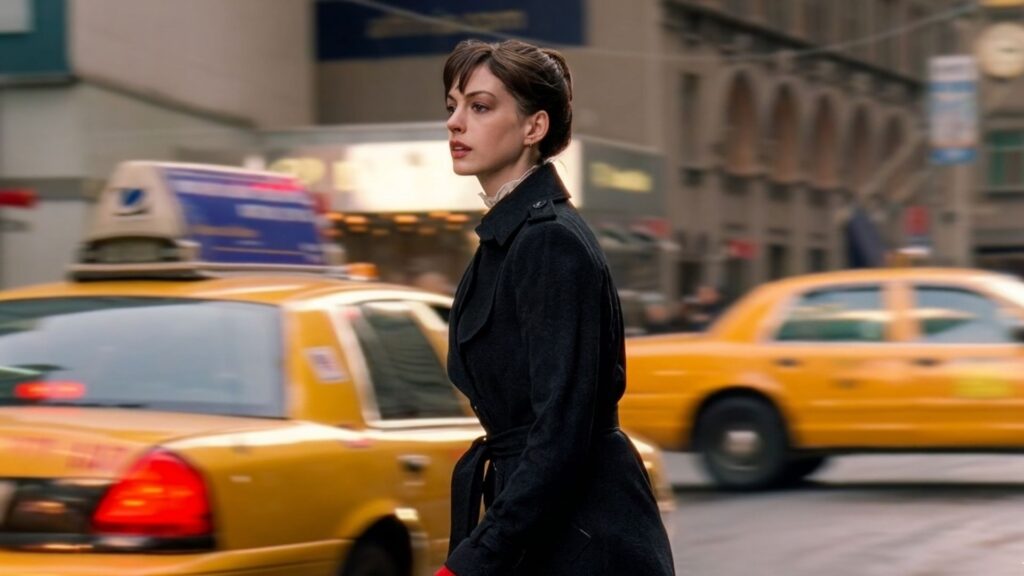
What triggers Andy’s transformation isn’t a sudden interest in fashion but the moment she hits a brick wall. The impossible task—where Miranda expects her to find a flight in the middle of a hurricane—and the harsh criticism that follows mark a turning point for Andy.
This scene forces her to realise a stark truth: if she wants to be part of this organisation, she must first don its symbols.
1. From Rejection to Acceptance
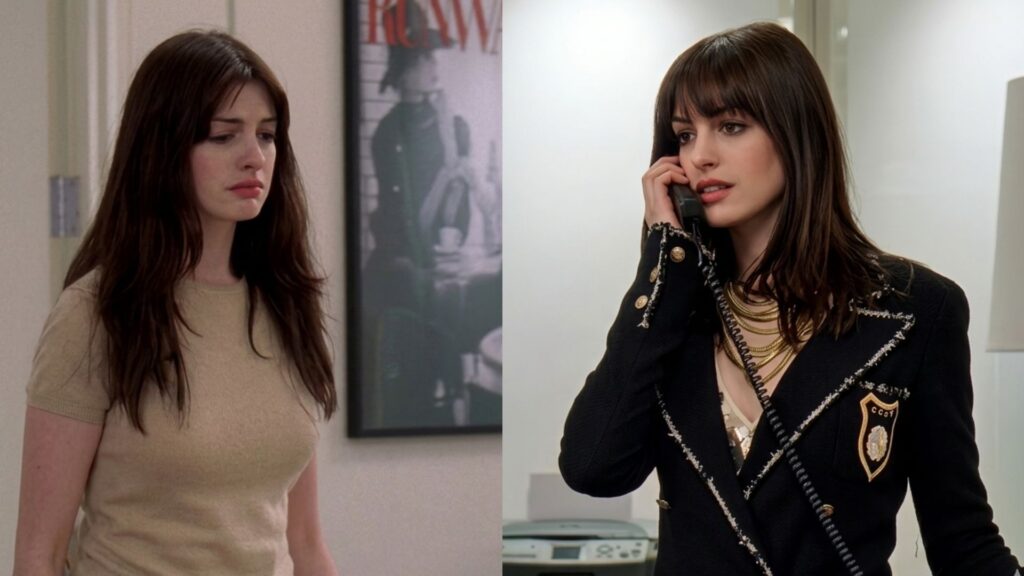
Initially, Andy views clothes as ‘merely pieces to cover her’. At this stage, she stands her ground and justifies her perspective by adopting the mantra, ‘I’m just doing my job’. For her, this ‘armour’ is not a surrender but a strategic tool that allows her to maintain her own identity while proving she can excel in Miranda’s world.
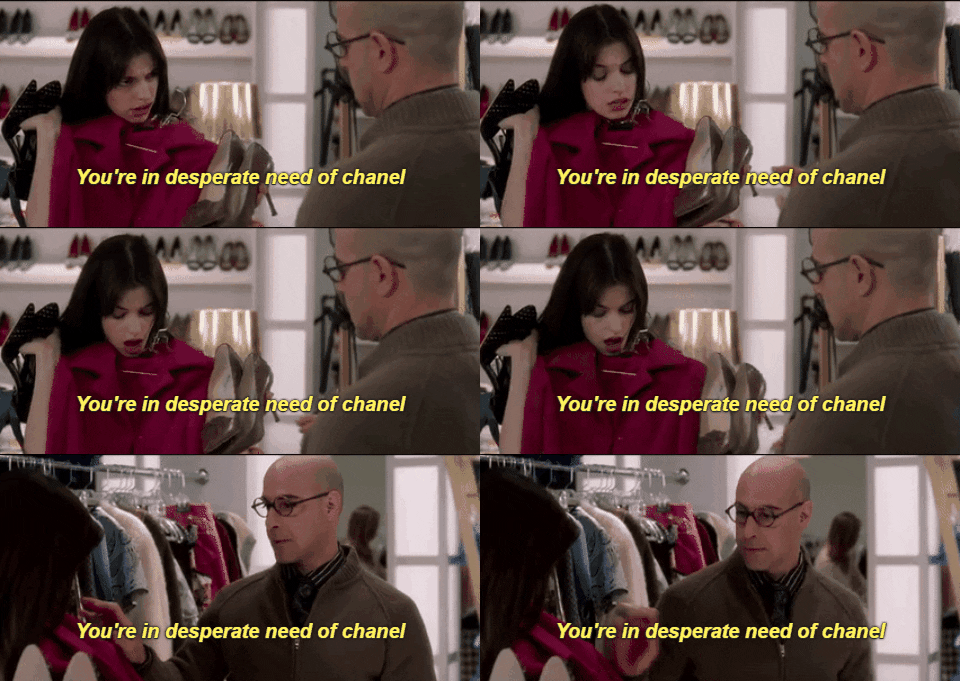
However, the catalyst for change is the enlightening—and harsh—conversation with Nigel. He makes her realise that fashion is not about vanity but a form of art and labour that shapes the world. This new perspective, combined with the frustration of being an outsider, pushes her toward a profound stylistic transformation.”
2. Brands as Armour
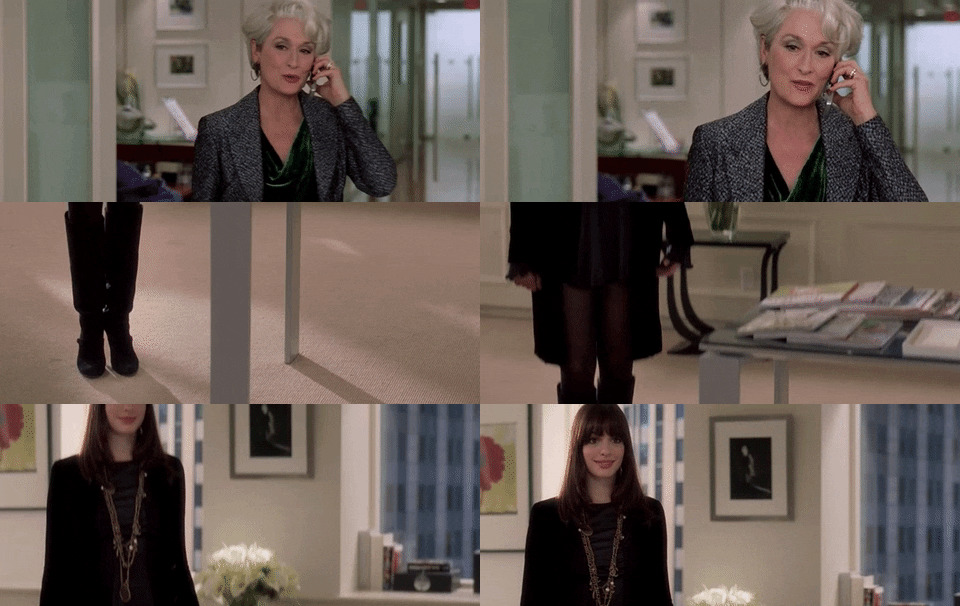
That iconic moment when Andy walks into the office in Chanel boots is the pinnacle of symbolic consumption. Clothes are no longer just fabric; they are the message Andy sends to Miranda, her colleagues, and the entire world: ‘I belong here, and I am playing this game by its rules.’
3. The Power of Image
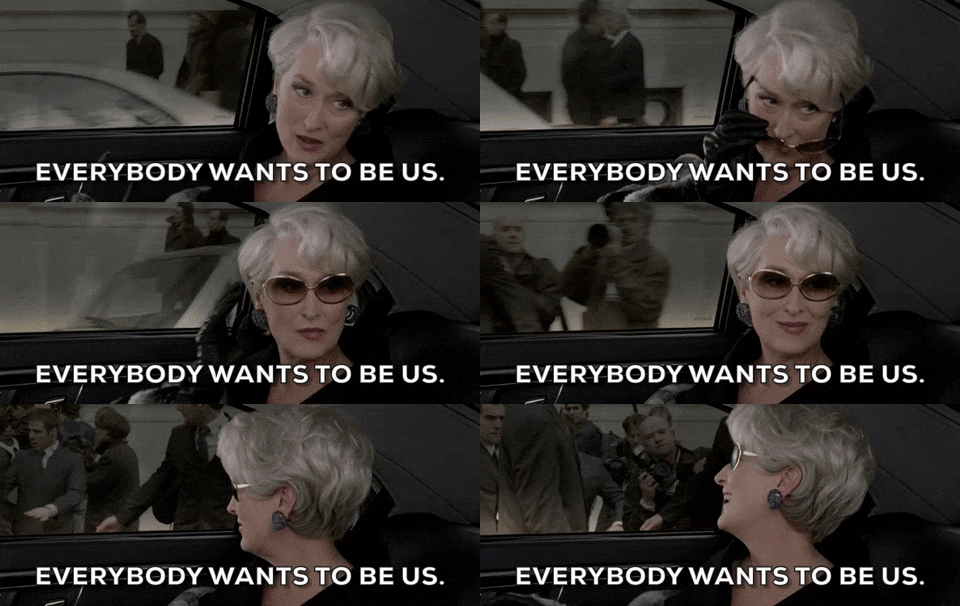
Every luxury brand consumed solidifies Andy’s place within the Runway culture. In this world, a Chanel bag is not an accessory but a social passport. She is no longer an ‘outsider’ judged by her appearance but a ‘player’ who has mastered the silent language of the hierarchy. By consuming these symbols, Andy ceases to be a subject of the system and begins to use its power.
Conclusion: What Are We Really Buying?
The Devil Wears Prada shows us that sometimes a pair of shoes isn’t just for walking; it is the key to locked doors. Symbolic consumption is the silent language of the modern world, where brands sell ‘meaning’ rather than just products.
Do you think Andy’s survival in Miranda’s world would have even been possible without those Chanel boots?
For the Brave Souls and Scholars
Articles
Tangsupwattana W. & Liu X. (2018). Effect of emotional experience on symbolic consumption in Generation Y consumers, Marketing Intelligence & Planning, 36(5), 514–527. https://doi.org/10.1108/MIP-11-2017-0316
Witt, U. (2010). Symbolic consumption and the social construction of product characteristics. Structural Change and Economic Dynamics, 21(1), 17-25. https://doi.org/10.1016/j.strueco.2009.11.008.
Books
Gordillo-Rodríguez, M. T., & Sanz-Marcos, P. (2020). Symbolic consumption in the online world: The construction of social identity and fashion influencers. In Handbook of research on transmedia storytelling, audience engagement, and business strategies (pp. 130-146). IGI Global Scientific Publishing. DOI: 10.4018/978-1-7998-3119-8.ch010


Leave a Comment