

Explore the hidden marketing lesson in The Dressmaker and learn how Status Consumption shapes consumer behavior, identity, and social perception.

Why Clothes Change More Than Appearance: The Status Consumption Lesson in The Dressmaker
-
- 2 minute read
- 0 Comments
At first glance, The Dressmaker appears to be a story about fashion, revenge, and redemption. But beyond the surface, it teaches an interesting lesson about consumer behaviour.
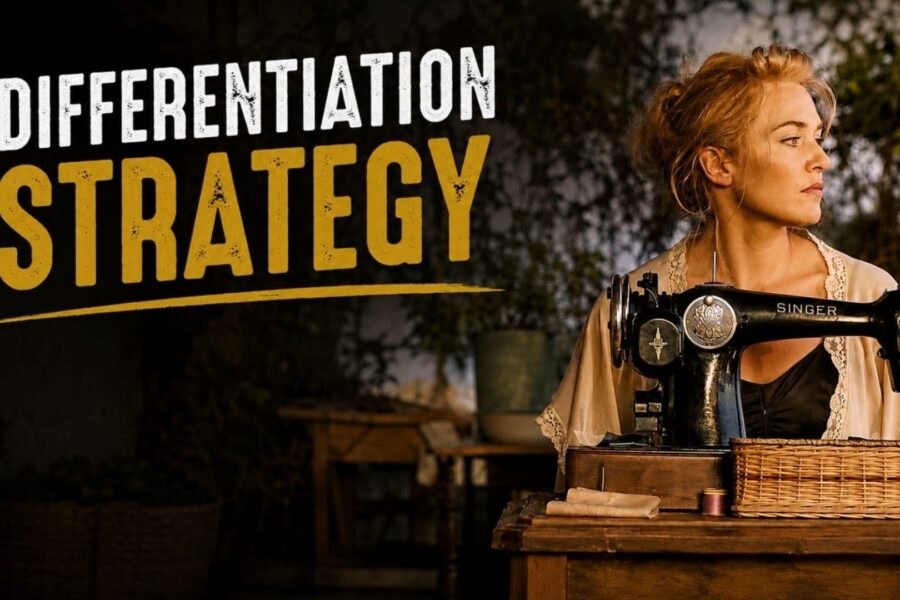
One of the film’s most compelling examples is Gertrude Pratt’s transformation. Although her personality does not alter overnight, how others perceive her does—and much of that transformation begins with what she wears.
This is a powerful illustration of Status Consumption.

What Is Status Consumption?
Status consumption refers to buying products not only for their functional benefits, but also for the social prestige they represent.
Some products help to solve problems. Others help us communicate who we are—or who we want to be.
Luxury watches tell the time. Designer handbags hold belongings. High-end cars provide transportation. However, customers frequently appreciate these things for reasons other than their practical function: the signal they send to others.
Gertrude Doesn’t Just Change Her Wardrobe

When Gertrude starts wearing Tilly Dunnage’s clothes, something amazing happens. People begin treating her differently. She gets more attention. She gets confidence. Social chances that were previously beyond your reach suddenly become accessible.
Gertrude remains the same regardless of the outfits she wears. Instead, they alter how others view her—and, ultimately, how she perceives herself. This is what makes the film such a powerful representation of Status Consumption.
Clothes as Social Signals

Marketing experts have long claimed that items serve as symbols.
They communicate wealth.
Taste.
Success.
Belonging.
Fashion is one of the most obvious examples.
Long before anyone speaks, clothing begins to transmit messages. Tilly’s designs in The Dressmaker are transformed into signs of elegance and status, rather than simply lovely outfits.
Why Status Matters in Consumer Behavior

Consumers don’t always make decisions based solely on price or functionality. Sometimes they choose products because those products help them:
- Gain social approval
- Express identity
- Increase confidence
- Feel successful
- Belong to a desired social group
Status Consumption isn’t necessarily about showing off. More often, it’s about how people want to be perceived by themselves and by others.
The Marketing Lesson Behind The Dressmaker

The outfit is not the only factor driving Gertrude’s change. It is determined by what the clothing represents. People view and treat her differently when she begins to wear Tilly’s designs, and chances that were previously out of reach become possible. The thing itself hasn’t improved her life, but its symbolic meaning has.
This is the essence of status consumption. Customers do not always purchase things based only on their utilitarian value. They also purchase things that reflect their status, identity, and social meaning. The Dressmaker reminds us that things frequently add worth beyond their functional purpose. Sometimes what people actually want isn’t the thing itself, but the perception associated with it.
For the Brave Souls and Scholars
Sestino, A., Olivieri, M., & Guercini, S. (2026). The Effect of Value-Signaling Message Framing on Consumer Reactions: The Roles of Aesthetic Appeal and Status Consumption Orientation. Journal of Global Marketing, 1-20. https://doi.org/10.1080/08911762.2026.2663847
Sahin, O., & Nasir, S. (2022). The effects of status consumption and conspicuous consumption on perceived symbolic status. Journal of Marketing Theory and Practice, 30(1), 68-85. https://doi.org/10.1080/10696679.2021.1888649
Pybus, K., Power, M., Pickett, K. E., & Wilkinson, R. (2022). Income inequality, status consumption and status anxiety: an exploratory review of implications for sustainability and directions for future research. Social Sciences & Humanities Open, 6(1), 100353. https://doi.org/10.1016/j.ssaho.2022.100353

Leave a Comment