

Chocolat explores Approach-Avoidance Conflict, the psychological tension that occurs when people simultaneously desire and resist the same thing. Through the villagers’ relationship with chocolate, the film reveals how attraction, guilt, temptation, and self-control constantly compete in human decision-making.
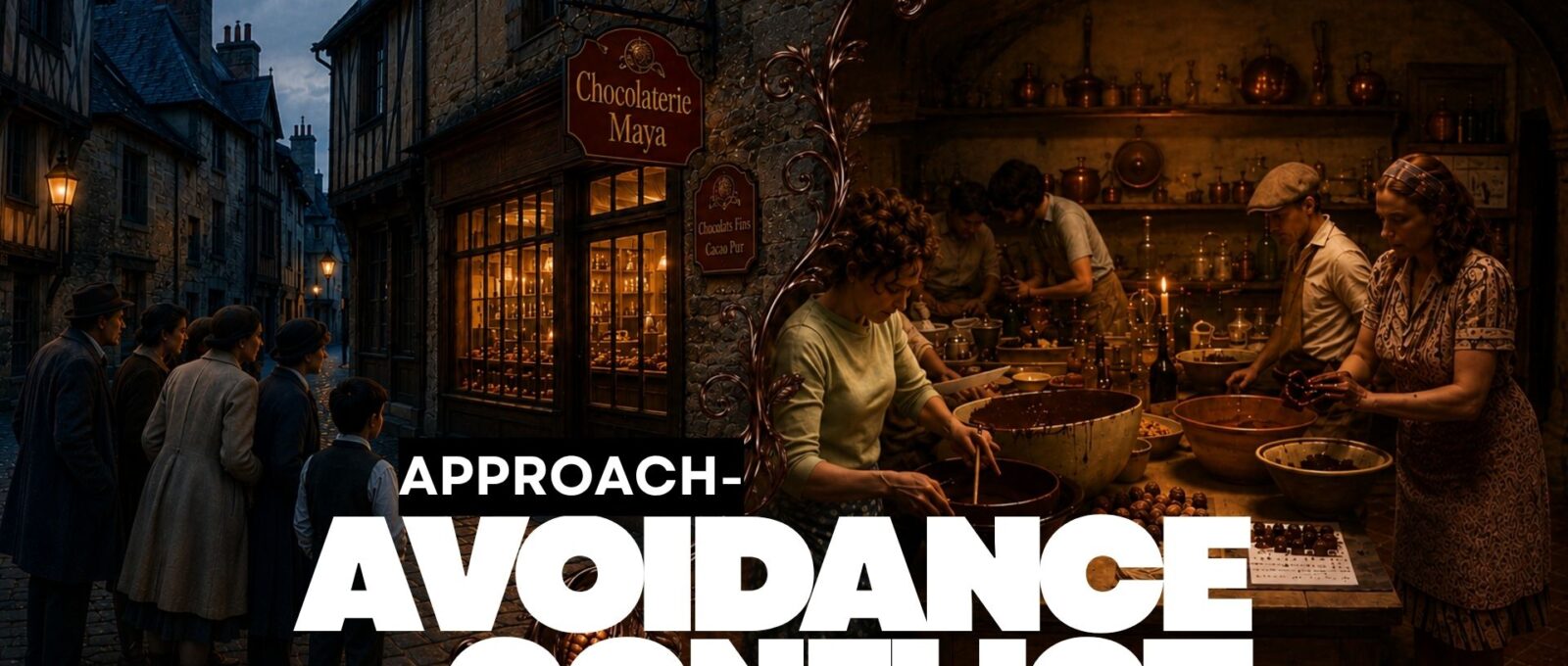
A Battle of Desire: Chocolat and Marketing’s Most Human Conflict
-
- 4 minute read
- 0 Comments
You’re standing in front of a display window. Behind the glass sits a handmade chocolate truffle, lightly dusted with cocoa powder. One voice whispers:
“Go ahead. Just one. You deserve it.”
Just as you reach for it, another voice interrupts:
“You started your diet on Monday. One bite turns into two. Don’t ruin your progress.”
Sound familiar?

Approach-Avoidance Conflict: when a product creates both desire and hesitation at the same time.
Few films express this inner battle as brilliantly or delightfully as Chocolat (2000). When Vianne Rocher starts her chocolate shop in a conservative French town, she does not merely begin a company. She initiates a psychological war. And she does so during Lent, a season associated with restraint, sacrifice, and abstaining from earthly pleasures.
Suddenly, the people are confronted with a temptation they cannot ignore. So, what precisely is going on in their minds? And what can companies learn from one of the most human conflicts we face every day?
Two Voices in the Village Square: Desire vs. Guilt
The townspeople’s reaction to Vianne’s shop is immediate—but deeply conflicted. The smell of cocoa drifts through the streets. The colourful decorations pique their interest. The cosy atmosphere of the shop contrasts with the frigid rigidity of village life. Part of them wants to go inside. Another part insists that they stay away. That tension is at the heart of the approach-avoidance dilemma. The same object might cause both attraction and discomfort. The chocolate isn’t intimidating since it tastes awful.
It is frightening because it symbolizes something larger:
- pleasure,
- temptation,
- freedom,
- self-indulgence.
The villagers want what the chocolate represents. They are also afraid of what it represents.
The Mayor: The Embodiment of Avoidance

No character represents the “avoidance” side of the conflict more clearly than Count de Reynaud. To him, Vianne’s chocolate shop is not simply a business. It is a threat.
A threat to discipline.
A threat to order.
A threat to the values he believes hold the community together.
Throughout the film, he tries to suppress temptation by limiting access to it. He criticises the shop. He alerts the villagers. He positions himself as the guardian of restriction. But, underlying that resistance, there is something deeper: temptation. The more he fights against the chocolate, the more power it appears to have over him. And this is frequently how approach-avoidance conflict manifests. What we try to repress does not always vanish. It occasionally gains strength.
The Strongest Conflict Happens Inside Us
One reason Chocolat feels so relatable is that most of us experience this conflict regularly. We see it when:
- buying an expensive item we want but cannot justify,
- ordering dessert after promising ourselves we would eat healthier,
- booking a trip we fear we cannot afford,
- upgrading to the newest technology while worrying about overspending.
Approach-avoidance conflict is not limited to chocolate. It appears whenever desire meets hesitation. Whenever pleasure collides with guilt. Whenever freedom encounters fear. The villagers are not unusual. They are simply human.
Vianne’s Hidden Formula: Reducing the Fear
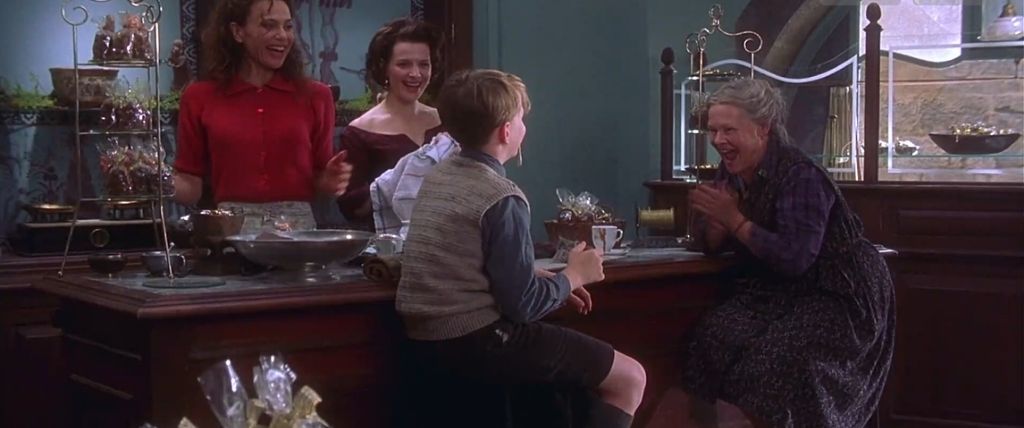
What makes Vianne fascinating is that she never tries to overpower resistance. Instead, she gently lowers it. She understands that people rarely need more reasons to desire something. What they need is permission.
Permission to enjoy.
Permission to choose.
Permission to stop feeling guilty.
Rather than presenting chocolate as a sinful indulgence, she reframes it as something meaningful: a comfort, a celebration, a source of connection, a small act of joy.
For Armande, chocolate is not merely candy. It becomes a symbol of vitality and living life on her own terms. By changing the meaning attached to the product, Vianne changes how people feel about consuming it. And that changes behavior.
The Night Everything Breaks

The most powerful example of approach-avoidance conflict occurs at the end of the film. After spending the entire novel fighting temptation, Count de Reynaud visits the chocolate shop alone at night. His objective is not to indulge. His purpose is to destroy. But then he sees a piece of chocolate. He took a bite. Then another. And another. Years of discipline can be destroyed in a moment.
The scene isn’t actually about chocolate. It explores what occurs when a desire is denied for an extended period of time. The conflict eventually reaches a breaking point. Because the things we despise are not often the ones that present us with the greatest challenge. They are the things we desire most.
What This Means for Brands
Many brands focus almost exclusively on desire. They ask:
“Why would people want this?”
But Chocolat reminds us that an equally important question is:
“Why might people hesitate?”
Consumers often experience hidden barriers: guilt, uncertainty, fear of making the wrong choice, social judgment, financial concerns, perceived risk.
The strongest brands do not simply increase desire. They reduce hesitation. Today we see this everywhere:
- sustainable brands reduce environmental guilt,
- luxury brands frame purchases as deserved rewards,
- free trials remove uncertainty,
- generous return policies reduce perceived risk.
The strategy is remarkably similar to Vianne’s approach. She does not make the chocolate more tempting. She makes it feel safer to enjoy.
Standing in Front of the Window
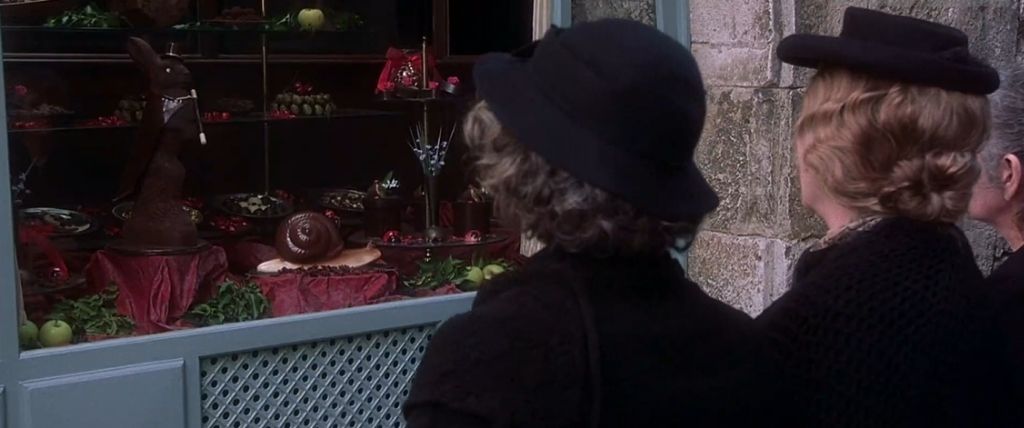
Chocolat eventually shows us that marketing is more than just establishing attraction. It is about recognising the tension between attraction and resistance. People rarely make decisions based just on desire. Their worries, concerns, and internal conflicts also factor into the decision. Brands that grasp both sides of the consumer’s mind are more likely to win. Because loyalty is not formed when individuals merely want stuff. It is constructed when they no longer feel compelled to fight for it. That is exactly what Vianne’s small chocolate shop did in the end.
For the Brave Souls and Scholars
Garcia-Guerrero, S., O’Hora, D., Zgonnikov, A., & Scherbaum, S. (2023). The action dynamics of approach-avoidance conflict during decision-making. Quarterly Journal of Experimental Psychology, 76(1), 160-179. https://doi.org/10.1177/17470218221087625
Penz, E., & Hogg, M. K. (2011). The role of mixed emotions in consumer behaviour: Investigating ambivalence in consumers’ experiences of approach‐avoidance conflicts in online and offline settings. European Journal of Marketing, 45(1-2), 104-132. https://doi.org/10.1108/03090561111095612
Pham Thi, T. D., & Duong, N. T. (2026). When customers avoid, do they return? Insights from service recovery in food delivery platforms. Total Quality Management & Business Excellence, 37(3-4), 337-353. https://doi.org/10.1080/14783363.2026.2619875




Leave a Comment